“Psychic Who Predicted Covid-19 Foresees Major Political Shift in 2026”
Predictions of the future have long fascinated humanity, offering both a mirror to our anxieties and a lens into the imagination.
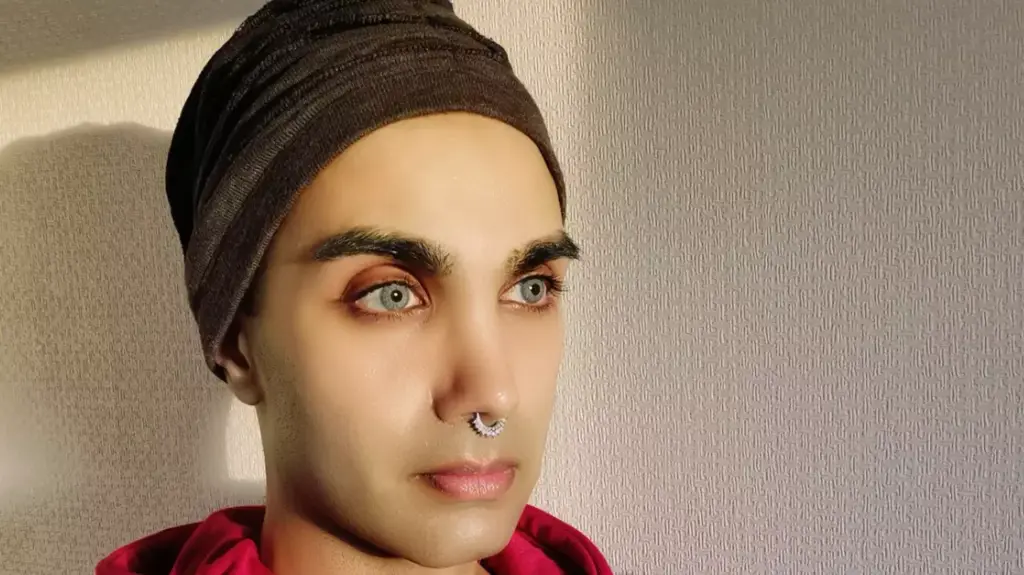
In recent months, a psychic named Nicolas Aujula has captured public attention with a set of forecasts that have been described as dramatic, unsettling, and provocative.
Aujula, who previously claimed to have foreseen the Covid-19 pandemic, now suggests that 2026 will be a year of profound disruption—a period he believes could “break” the world. According to his descriptions, the potential crises are not limited to a single nation, leader, or region, but rather involve a series of interconnected events affecting the wider human order.
Aujula’s predictions arrive fully formed, painting vivid and alarming scenes. He describes earthquakes striking southern Europe, Turkey, and portions of the Pacific region, suggesting these would affect familiar holiday destinations
. He warns of a major global storm event, characterized by destructive winds and flooding, the scale of which he implies is unusual and historically significant.
He also predicts a royal scandal involving Prince Harry and Meghan Markle, which he claims could shift public sentiment dramatically, influencing the monarchy’s perception in the eyes of millions.
Alongside these events, he references the potential “public unraveling” of a former U.S. president, framing this both literally and metaphorically as a symbol of broader instability.
Finally, he draws attention to a mysterious neurological illness, striking seemingly at random, producing aneurysm-like effects with no clear pattern, an event he suggests could exacerbate societal anxiety. The psychic emphasizes that his visions are involuntary.
He describes sudden flashes, symbolic imagery, and experiences linked to past lives, presenting the future as a continuum rather than a detached, predictable timeline.
Aujula asserts that the impressions he receives for 2026 are consistent in tone with the ones he associates with prior global events, including his earlier predictions surrounding Covid-19. He stresses, however, that these impressions are not always precise in their details; symbols can be misread, events misinterpreted, and the timing of potential occurrences is uncertain.
Despite these caveats, Aujula maintains that the overarching emotional resonance of his visions is clear: 2026, he believes, will feel overwhelmingly chaotic, destabilizing, and intense. Understanding these claims requires context. Predictions of this nature are rarely evaluated in isolation.

They are often shaped by and reflect the fears already circulating in society. In Aujula’s forecasts, elements of climate anxiety, political uncertainty, and social turbulence are evident.
Earthquakes, storms, and unexpected illnesses evoke contemporary fears about natural disasters and global health crises. References to royal controversies and political scandals mirror ongoing public fascination with leadership, accountability, and social morality.
These predictions do not exist in a vacuum; they are interwoven with broader societal concerns about fragility, unpredictability, and institutional trust. History offers valuable perspective in evaluating such claims.
Humanity has repeatedly confronted periods described as “breaking” or transformative. From natural disasters to financial collapses, political upheavals to social revolutions, moments of intense strain are recurring patterns rather than unique anomalies.
What history demonstrates, however, is that resilience often emerges in parallel with crisis. Communities adapt, systems recover, and individuals find ways to navigate uncertainty. While visions and prophecies can heighten awareness, they do not dictate inevitability.
Catastrophe is rarely scheduled or foretold with precision, and fear alone is rarely an accurate predictor of outcomes. Aujula’s approach, combining symbolic imagery with personal mythology, underscores the distinction between prediction and interpretation.
He acknowledges the potential for misreading symbols, noting that visions are filtered through his consciousness and understanding, and that timing is often ambiguous. This admission reflects an important principle: forecasts of the future, particularly those framed in dramatic or symbolic terms, are inherently interpretive rather than deterministic.
They reveal more about human perception, collective anxieties, and narrative structures than they do about precise causal sequences or guaranteed events. The dramatic nature of these forecasts has, unsurprisingly, drawn attention online and in media circles.
Headlines emphasize the intensity of Aujula’s visions, highlighting potential disasters and scandals. Social media amplifies these messages, often with emotional framing that accentuates anxiety. Yet the broader lesson lies not in whether these events will unfold exactly as described, but in how society engages with predictions.
Public responses often oscillate between fascination, fear, skepticism, and humor, reflecting both our vulnerability to uncertainty and our innate desire to understand and anticipate the future. This interplay between prediction and perception is particularly important in a time of heightened global concern.
Climate change, pandemics, political polarization, and economic volatility already dominate public consciousness. In such an environment, dramatic forecasts like Aujula’s resonate strongly, offering narrative shape to collective anxiety.
The psychic’s visions function as a kind of storytelling mechanism, translating diffuse fears into concrete scenarios, providing both intrigue and a sense of structure—even if that structure is symbolic or metaphorical rather than literal. Crucially, discernment remains essential.